In the rural economy of Lunigiana, wool was a fundamental resource which was used to produce clothing, blankets, and fabrics essential for everyday life. The wool supply chain that is based on processes handed down through generations, fit perfectly with the agricultural and pastoral rhythms of our region.
- 1Shering: Wool processing began in spring, when the sheep were sheared. This task was entrusted to the men of the village, who used special scissors. Lunigiana region was an ideal place for raising sheep such as the Massese (a local breed renowned for its high-quality wool) and the Zerasca (typical of the Zeri Valleys) thanks to its hills and mountain pastures.
- 2Washing: After shearing, the wool was washed in the streams of Lunigiana, taking advantage of the fresh and abundant water. This process removed natural grease (lanolin) and impurities.
- 3
Carding: Once dry, the wool was carded, a process carried out by hand or with wooden and iron tools equipped with teeth. This step untangled the fibers, preparing them for spinning.
- 4
Spinning:The spinning process was handled by women, using hand spindles and spinning wheels. The skilled movements of the spinners transformed wool tufts into even and durable yarns. At this stage they were ready for weaving or making garments.
- 5
Dyeing:Yarn was often dyed using natural pigments extracted from locally available plants, roots and barks, such as woad for shades of blue or madder for red.
- 6
Weaving: Women produced coarse fabrics using artisanal looms. They were often used to make cloaks, blankets, sacks and other everyday items.

Wool as a community resource
Wool processing was not just an economic activity, but also a moment of communal collaboration. Each family contributed with their sheep and labor, sharing knowledge and skills.
In the past decade, pastoralism has seen a reappearance in Lunigiana, particularly among women. Thanks to them, wool processing has also been revived, preserving ancient knowledge and promoting local breeds.
Some examples in 2025 are: La Nera Agricultural Farm by Mariotti Cristina with Massese sheep, Cinzia Angiolini with Zerasca sheep and Federica Figone with the native Val di Vara sheep.
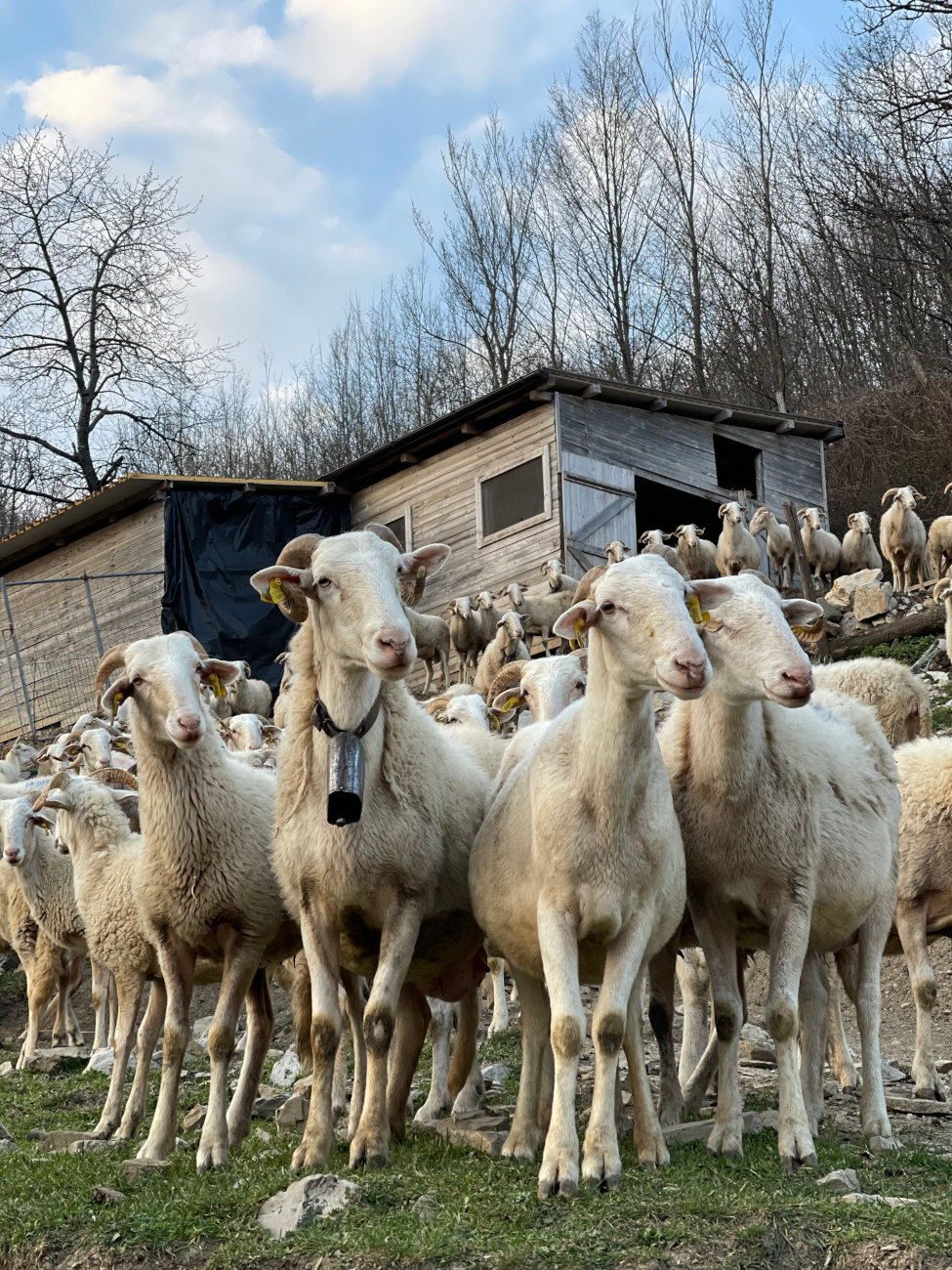
Testifying to a centuries-old tradition that still endures, Giancarlo Boschetti is today the last transhumant shepherd of Lunigiana. With his 250 Massese sheep he keeps alive the ancient ritual of transhumance, connecting the cycles of nature with those of humans.

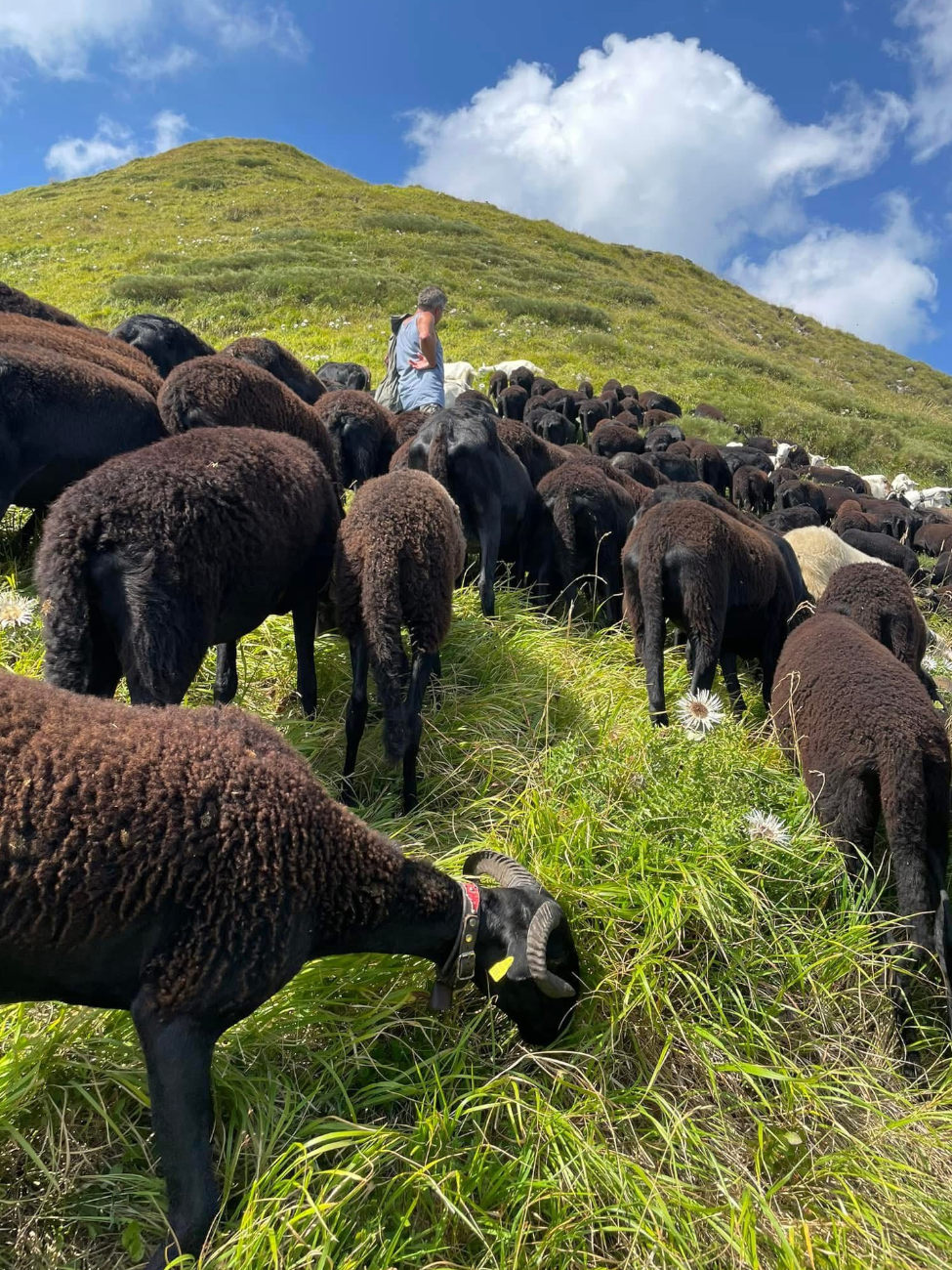
The Massese Breed with the Transhumant Shepherd Giancarlo Boschetti
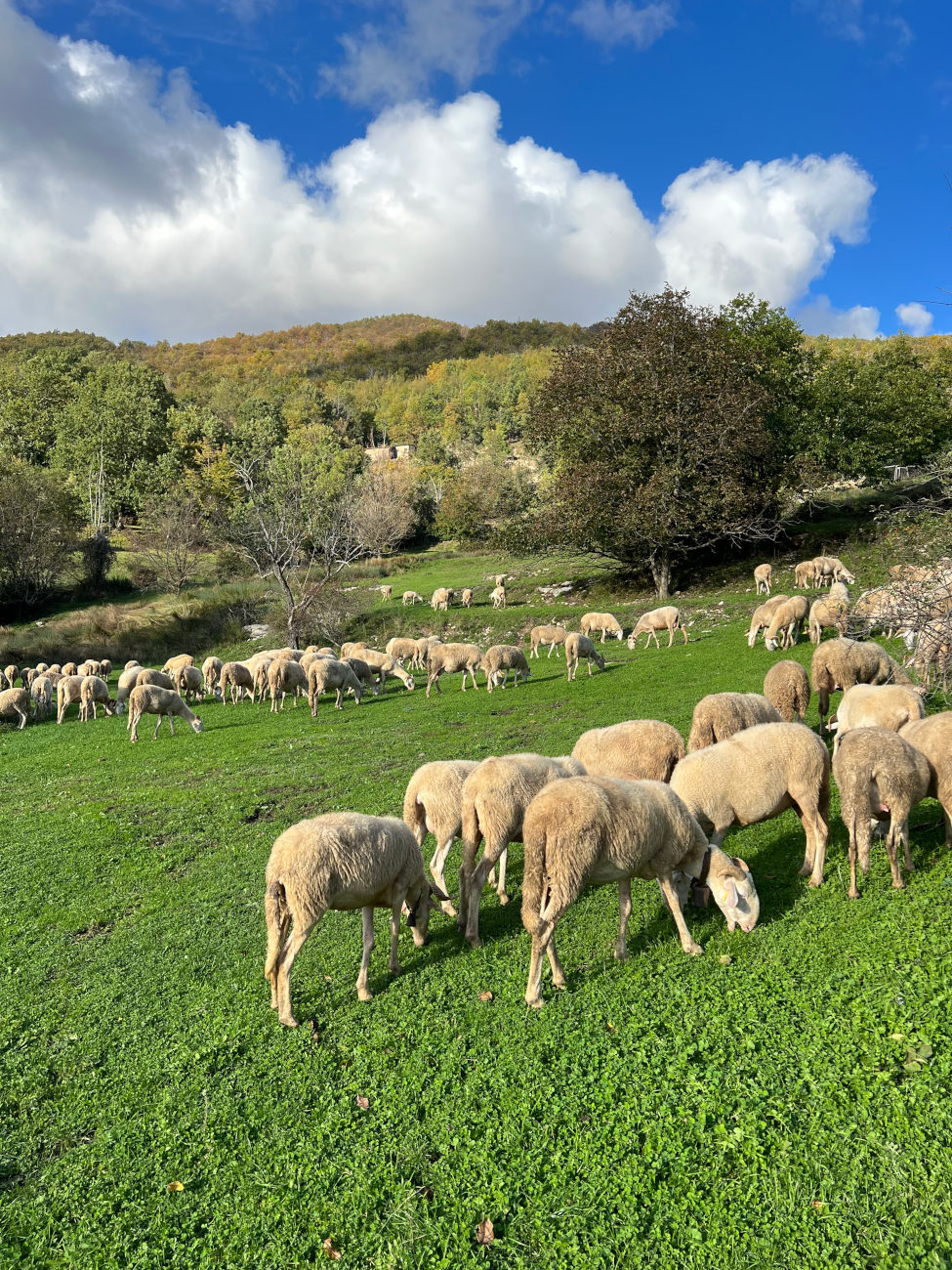
The Zerasca Breed at Montagna Verde Farm in Apella
Did you know?
The shepherds of Lunigiana were often transhumant and they used to move their flocks from the mountains to the olive groves and milder valley pastures during the winter. The shepherds used to cook milk, cheese and lamb in cast-iron pans that they carried with them. They were heavy discs of cast iron, called soprano and sottano, placed directly over the embers to slowly cook food according to a tradition as old as pastoral life itself.
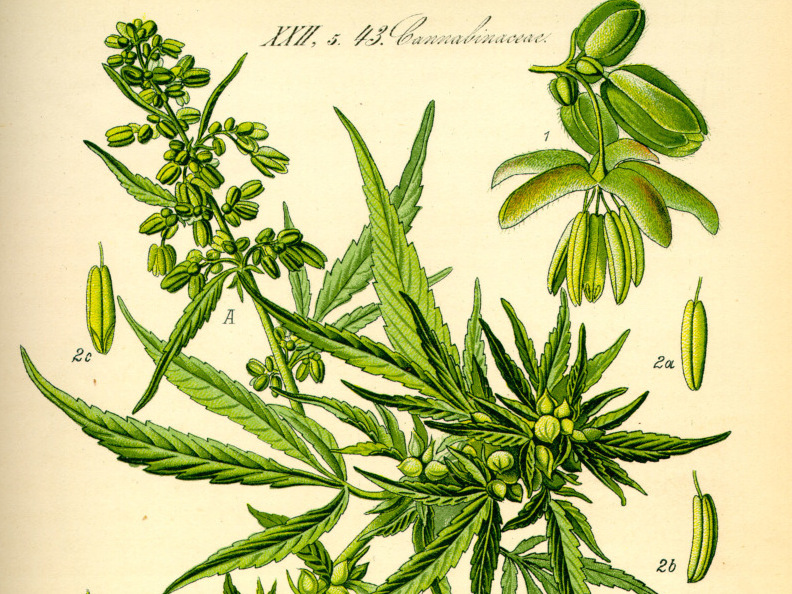
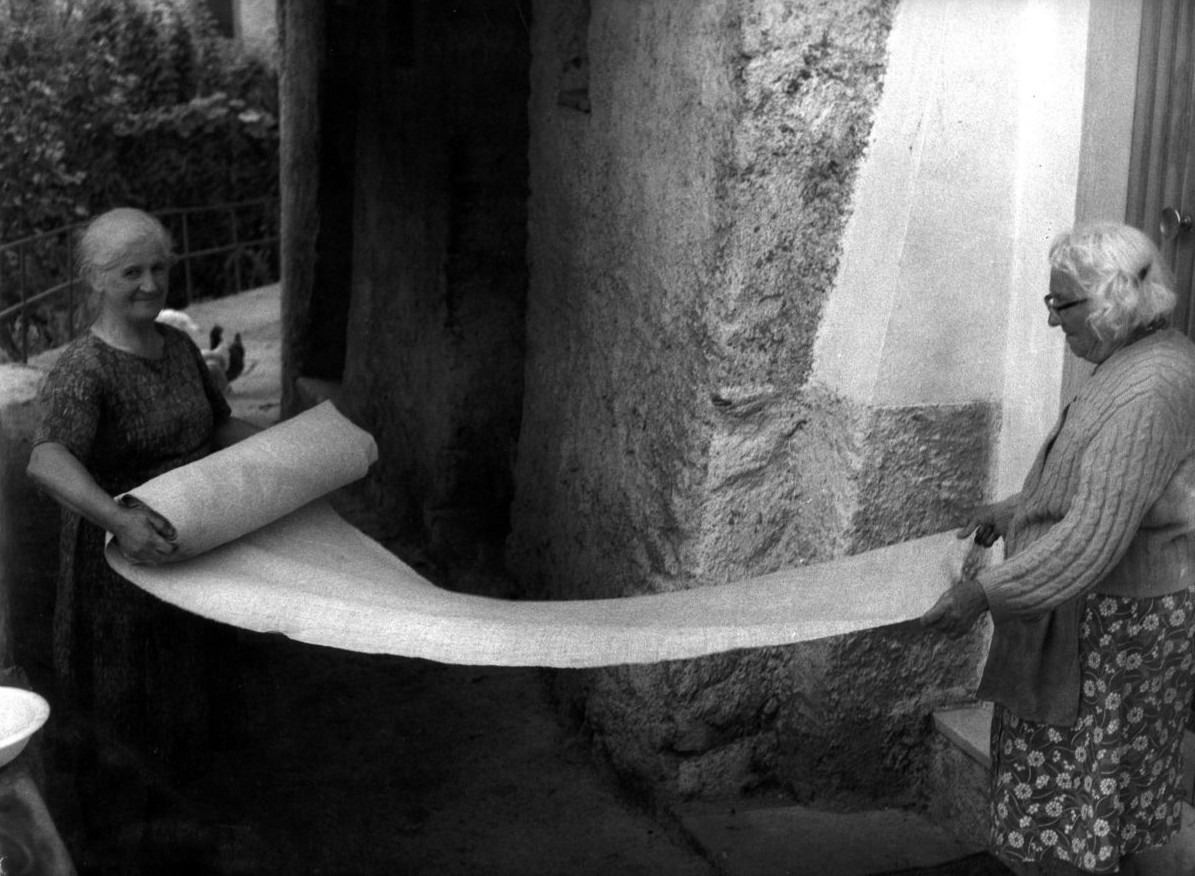
The sturdier fabrics: Farmers in Lunigiana used mixed fabrics—such as wool and hemp—to make durable and practical clothing. “Half-wool” garments, that were actually lighter in weight, were suitable for daily work, while cloaks made of coarse wool protected against cold and rain during long winters and transhumance journeys.
The annual Event “Mestieri nel Borgo” in Ponticello brings back to life several activities of Lunigiana’s ancient rural communities, featuring demonstrations of traditional crafts and the use of historic tools.