The sheep (Ovis aries) is a mammal of the bovids’ family, genus Ovis. It has been a domesticated animal since ancient times and it is now widespread in every continent. It lives mainly in flocks and shepherds often use and rely on shepherds dog in order to manage them.
The name sheep (lat. pecorino “small cut cattle”) is used to indicate the adult female, while the male is called ram, while the baby is called lamb up to a year of age. Its appearance is very different if we think about the numerous breeds that exist, in particular the height varies, at the withers between 70 and 130 cm. The horns may be both present in both sexes or not be present at all. The females have two inguinal udders and are sexually mature around 10-12 months old. The gestation lasts about five months and the lambs are often twins.
Life expectancy can vary from 12 to 15 years. The coat, or fleece, consists of thin and ruffled hairs (wad) and some other hairs which are longer, hard and rigid (guard hair) that together form the wool, used since ancient times as a textile fibre. The shearing of the fleece is carried out every year in late Spring, and it differs depending on the breed of the animal.
The sheep is also bred for milk and meat. Milk is mainly used for the production of Pecorino cheese and Ricotta. Thanks to its characteristic fleece, the sheep skin was one of the first “cloth” for humans and it is still present in some rustic clothing, as the mastruca that since the Sixteenth century represents the garment of Sardinian shepherds and consists of a long sleeveless jacket in sheep or goat leather that does not only protect from the heat, but it is also waterproof.
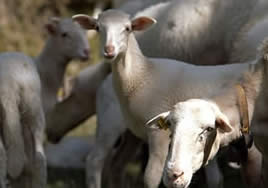
Zeri’s Sheep and Lamb
In Lunigiana, more precisely in Zeri area, in the province of Massa Carrara, the Zerasca sheep that is a native sheep breed has been existing since ancient times. Due to the centuries-old isolation of this area, the breed has managed to keep its characteristics intact over the time. It’s a rustic sheep, medium-sized, with a proportionate head, it also has a white coat and usually well-developed horns.
Its milk is very rich in nutrients since the protein content is higher than any other sheep breed. The only thing that the sheep needs to raise lambs is milk, since lambs are usually grown to produce meat. The animals are grazing all year round, except during the bad season. In Zeri area the pasture is organic and it has a remarkable extension and this is due to the fact that in Zeri are still perpetuated civic uses and collective properties, which are ancient forms of management of the property of the pastures that date back to pre-Roman times.
Today there are more than three thousand Zerasca sheep. There are many local breeders and the production area now is extended to several municipalities. Many local women consider the Zeri lamb one of the gastronomic jewels of our Country because of its extraordinary meat that is very tender and fragrant and more important of all it has no hint of wild. The most traditional preparation with this kind of meat is lamb cooked in typical cast-iron pots. In 2001 the “Consortium for the valorisation and the protection of the lamb of Zeri” was born with a rigorous disciplinary committed to the valorisation of the entire cultural chain linked to the breeding of this breed, including the rediscovery of a fabric called “mezzalana” with hemp and wool wrap which is a typical fabric of Lunigiana folk clothing.
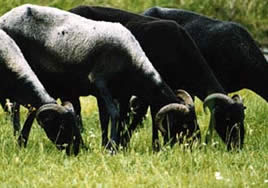
The massese sheep
The Massese sheep is a native sheep breed originating in the city of Massa and precisely the areas of Forno. Many are the documents that report the existence of flocks of this sheep breed grazing on the slopes of the Apuan Alps.
Niccolò Macchiavelli in his work “The life of Castruccio Castracani” speaks of quarrels between the inhabitants of Vinca and the shepherds of this sheep breed for the unauthorized use of pastures. The breeding of this kind of sheep goes from Forno area to the Massese Valley.
The transhumance is carried out by shepherds in the Summer after leaving the valley to go grazing on the mountains. This process contributes to the spread of the breed in the surrounding Apennine areas thus expanding the breeding of the Massese sheep in Lunigiana, in the provinces of Lucca, Pisa, Pistoia and Livorno, and also in the regions of Liguria and Emilia Romagna. Today the number of this breed is estimated at more than 60000 heads and represents the third Italian dairy sheep breed in terms of number.
The black colour of the coat and the horn are for sure morphological characteristics of this breed that distinguish it from all the others, especially because this is the only Italian breed in which all females have horns. It’s classified as a dairy breed, although meat production is not despised. The lamb, which is fed exclusively with mother’s milk, is raised for about a month and is slaughtered when it reaches about 15 kg weight.
When the lamb is taken away from the mother, the sheep is milked and with that milk, Ricotta and other kind of cheeses are made. This kind of milk is a very rich milk with a yield of 20%. Usually a Massese sheep produces around 150 litres of milk for 120 days of lactation. A promotion committee has been set up for “Agnello di latte di razza Massese” (Massese milk lamb), by which is meant the animal born and raised on farms in the province of Massa Carrara that breed Massese sheep. The meat must come from pure-bred Massese registered in the Genealogical Book, aged between 20 and 40 days with a live weight at slaughter that goes between 8 and 15 kg. Sheep are breed in the wild (only grazing) or semi-wild (partial integration in the barn with GMO-free cereals but under 50% of the ration, industrial feed and silage are not allowed to use).